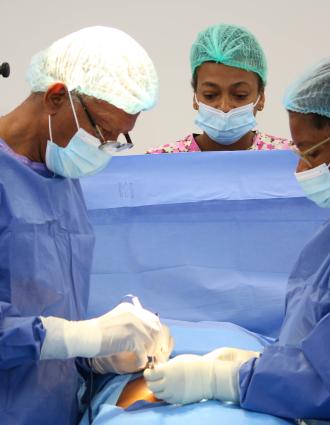
For the past six-months, St. Boniface Hospital has provided comprehensive medical and rehabilitative care for over 30 people who suffered severe injuries on January 12th. In the aftermath of the earthquake, St. Boniface has served as a calm, peaceful place to heal, away from the rubble, and the traffic and tents of the city. For many, our hospital has become a place to recover, rehabilitate and rejuvenate.
In a matter of days, St. Boniface became a center for rehabilitation, taking on a comprehensive team approach, utilizing doctors, nurses, rehabilitation specialists, social workers, and international volunteers to meet the needs of our new patients. We began daily physical and occupational therapies geared towards helping our patients embrace life's new physical challenges. Our goal became to restore the health, mobility and independence for some of those most vulnerable.
However, there were days when these goals all seemed too daunting, that we were trying to accomplish the impossible, that the grief was too heavy and the wounds were too deep. Many times the losses of family, friends and possessions seemed too vast and too massive to overcome. For the majority of patients, life was too unclear to set goals, or to try to think any farther ahead then the next meal, the next dressing change, the next round of medication.
Nevertheless, we were patient. We talked, we processed, we drew, we laughed, we prayed, some days we cried, but everyday, regardless of the pain or the fatigue, we worked, physically and emotionally. Even on the most challenging days, we found hope restored by the small, daily triumphs that emerged from the immense tragedies. Fractured femurs finally began to fuse, sensitive wounds transformed into scars, slow and painful steps turned into smooth and rhythmic strides, and tears shed over what seemed impossible turned into smiles for what could be achieved.
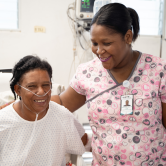
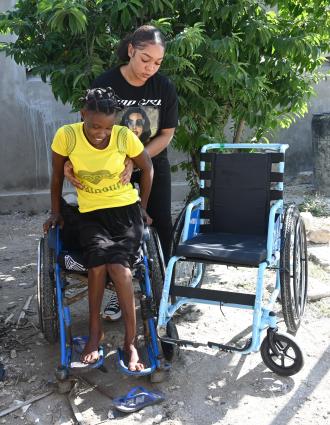
Over the past two weeks, two more of our long-term patients courageously returned to Port-au-Prince. These latest discharges helped us to reflect on the insurmountable obstacles these patients overcame during their time here. Two of our patients, one of them a 12 year-old-girl and the other a 59 year-old-woman, came to us unable to walk, dependent on caregivers and apprehensive about what the future may hold for them. Both departed Fond des Blancs with restored mobility, a renewed independence and a sense of determination for the future.
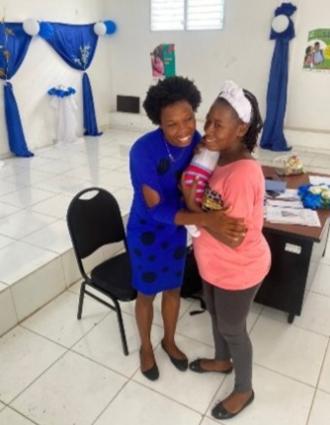
As a team, we have worked to prepare all of our patients for future challenges. Through psychosocial groups, recreational outings and the time and space to talk, we have watched strong supportive bonds form. After months of sharing stories and building community, for a few, the time came to return home. In preparation for this, we provided an opportunity for appropriate closure, a chance to have customary farewells, when on January 12th; there were too many missed goodbyes, lost chances to say ‘I love you' or ‘thank you' to family and friends. We made time for all of this. Though the progress has been significant, the healing is not complete. The work of mourning the loss of a family member, or one's mobility doesn't have a distinct ending point, but for many, the foundation has been laid to start to rebuild their lives.
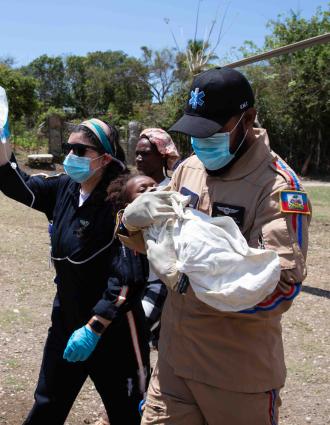
The day the most recent two patients departed, there was a receiving line of friends and employees to send them off. Over five months ago, helicopters dropped them in a field, leaving them in a town they had never been to. Now, they headed off, down the dusty, bumpy road out of Fond des Blancs, leaving a place they had come to call home. Currently, 15 patients remain with us, determined to make the same journey in the future, inspired by their friends' courageous recovery and bittersweet return.
Despite the challenges, our commitment to comprehensive rehabilitation and community reintegration has not wavered. Though we do not have all of the fiscal resources of other institutions, we are rich in human capital, community acceptance, and in faith. Over the last six-months, we have seen a movement from surviving to thriving, hurting to healing, and from patient to renewed person. Six months from now we are confident that there will be similar success stories to share. As we work tirelessly to help people regain personal independence, we hope the landscape of this country will follow suit. The stories of Ismerline, Gislene, and many others, have shown us that this work is not in vein and that hope is far from lost.